Next session
Lead, AI Curriculum · UB School of Management
Jue Guo
I research machine learning — and teach it to the people who will use it.
I build the AI curriculum for UB's Center for Intelligent Finance & Fintech, teach graduate machine learning courses as adjunct faculty, and host AI Office Hours, an open community of 2,800+ learners. I'm also completing my Ph.D. in Computer Science at UB.

- Students taught at UB
- 300+
- Graduate courses led
- 5
- Thesis students mentored
- 20+
- AI Office Hours members
- 2,800+
About
Research-grade rigor, taught to be used.
I lead AI curriculum at the University at Buffalo School of Management, where I’m building the AI program for the Center for Intelligent Finance and Fintech (CIFF) — graduate and executive modules that apply modern machine learning to valuation, trading systems, and model governance, with hands-on Python labs.
I’m also a Ph.D. candidate in Computer Science at UB, advised by Prof. A. Erdem Sariyüce, and adjunct faculty in the School of Engineering and Applied Sciences. My research is in machine learning — graph representation learning, AI in finance, and large language models. I’ve led five graduate courses for more than 300 students and mentored over 20 thesis students.
Outside the classroom I run AI Office Hours, an open community of 2,800+ learners that cuts through the hype to explain how modern AI actually works. I care about bridging research-grade rigor with code that ships.
Research interests
Graph representation learning · AI in finance · Large language models
Currently
- Lead, AI Curriculum UB School of Management · Center for Intelligent Finance & Fintech (CIFF) since 2026
- Adjunct Faculty UB School of Engineering & Applied Sciences since 2023
- Founder & Host AI Office Hours — an open AI learning community since 2026
- Lead STEM Instructor WhyMaker · in partnership with the New York Power Authority since 2025
Teaching
Graduate courses at the University at Buffalo
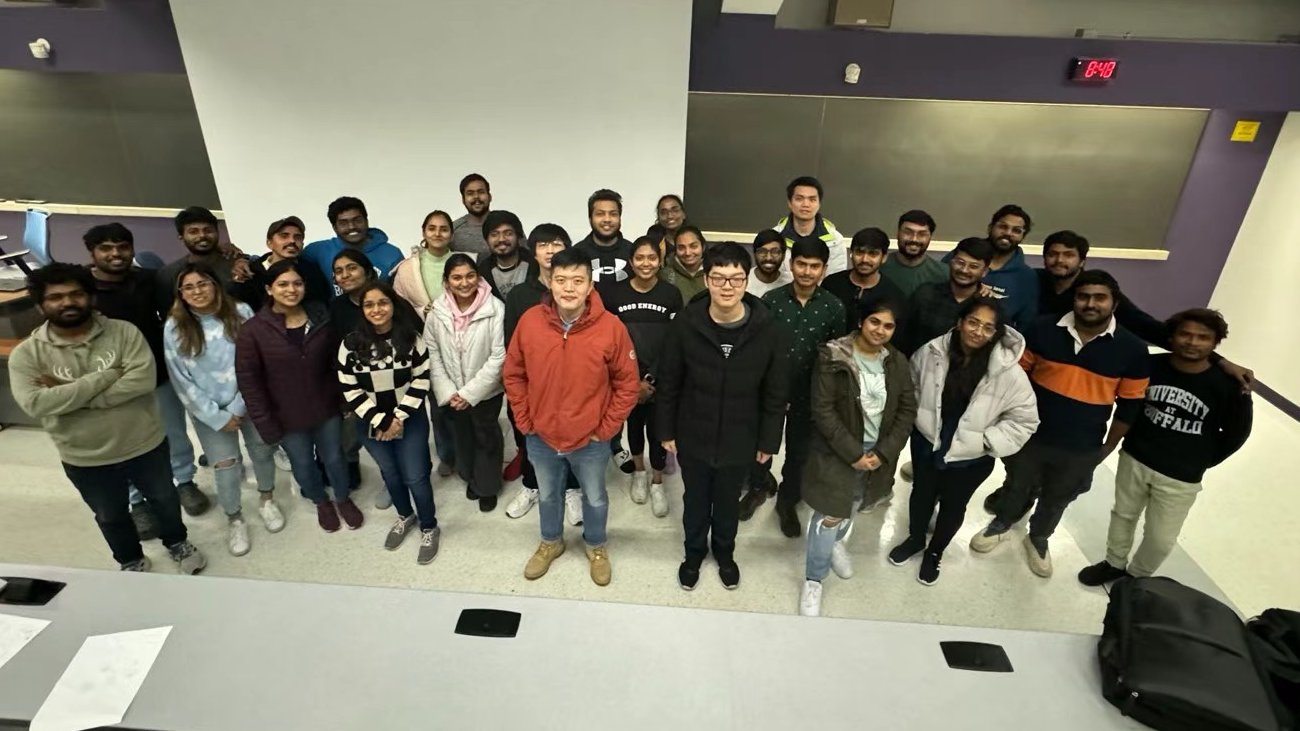
Since 2023 I have led five graduate courses for more than 300 students. Full lecture notes, slides, and schedules are online for every course.
-
Intro to Pattern Recognition
Statistical foundations of pattern recognition taught through the original papers — from Bayes decision theory to modern vision and Transformer models.
Syllabus & materials -
Algorithm Analysis & Design
Asymptotic analysis, divide-and-conquer, greedy, dynamic programming, graphs, NP-completeness, and approximation.
Syllabus & materials -
Basics of Artificial Intelligence
A hands-on introduction to modern AI in PyTorch — tensors, training workflows, classification, computer vision, and custom datasets.
Syllabus & materials -
Deep Learning
Neural networks from the ground up — optimization, CNNs, RNNs, and GNNs — with expanded notes from Dive into Deep Learning.
Syllabus & materials -
Intro to Machine Learning
Supervised and unsupervised learning, neural networks, regularization, and model evaluation with Python, scikit-learn, and PyTorch.
Syllabus & materials
Guest lectures and workshops on deep learning, LLMs, and applied AI are available on request — write to me.
Community
AI Office Hours
An open, no-prerequisites learning community of 2,800+ members, with around a hundred people at each live session. We set the hype aside and explain how modern AI actually works — for beginners and practitioners alike.
Session decks
-
01
Where AI Actually Is in 2026
A field overview — foundations, the deep-learning revolution, Transformers, and generative AI — closing with open Q&A.
Preview the slides
Click into the slides, then use the arrow keys to navigate.
For organizations
AI programs through CIFF
Through the Center for Intelligent Finance and Fintech at UB's School of Management, we design and deliver AI programs for financial institutions, nonprofits, and international partners.
-
Executive programs
For leadership teams who need to make sound AI decisions without becoming engineers.
-
Technical training
Machine learning, LLMs, and the evaluation methods that separate a working model from a demo — for analysts and developers.
-
Custom curriculum
Built around your data and your workflows, not generic case studies — from valuation and trading systems to model governance.
-
Applied research
Research partnerships that apply modern machine learning to real financial decision problems.
For self-learners
Books I recommend
Freely available texts I point students to when they want to go deeper on their own.
-
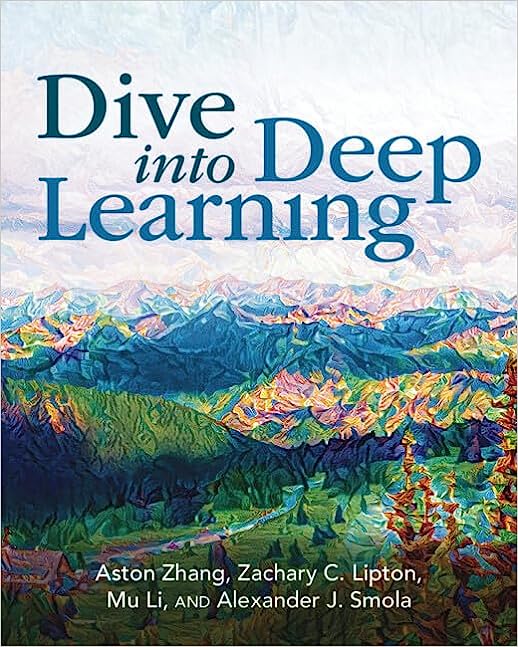
Dive into Deep Learning
Zhang, Lipton, Li & Smola
Interactive textbook with full implementations in PyTorch, MXNet, and JAX. The reference I lean on most in CSE 676.
-
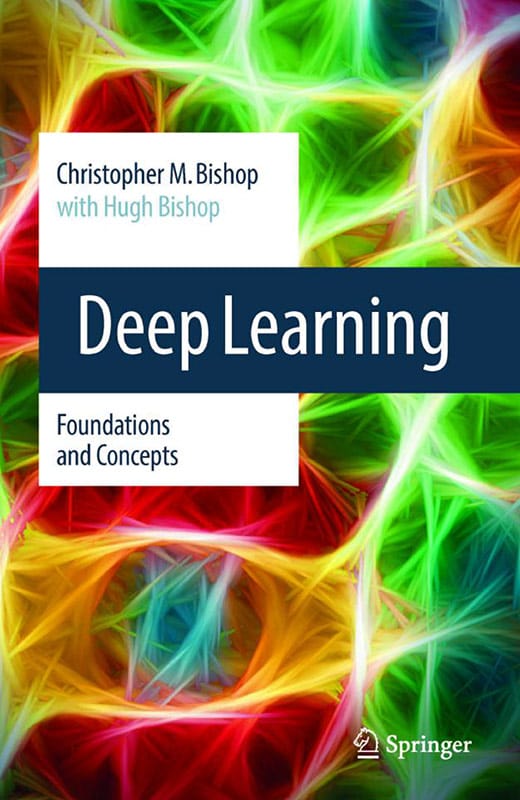
Deep Learning: Foundations and Concepts
Christopher M. Bishop & Hugh Bishop
A modern volume bridging classical ML to deep learning — the spiritual successor to PRML.
-
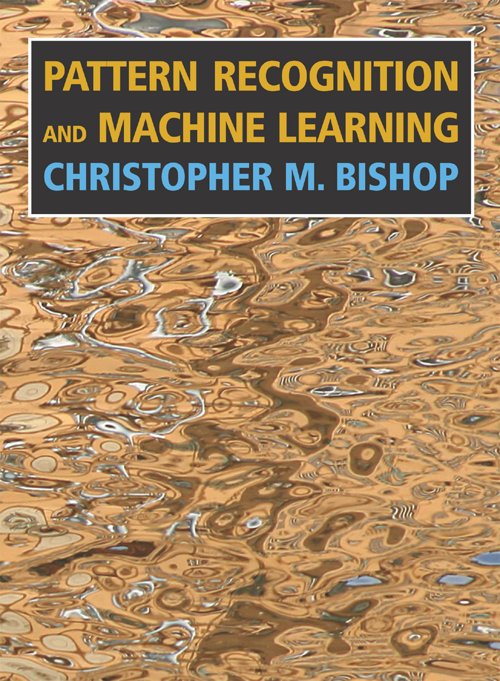
Pattern Recognition and Machine Learning
Christopher M. Bishop
The classic graduate ML text (2006). A rigorous foundation in Bayesian methods, kernels, and graphical models — freely available online as a PDF.